

In construction and other high-risk industries, ensuring workplace safety is more than a priority, it is a necessity. A permit-to-work (PTW) system has long been a trusted method to control hazardous work activities. But as digital transformation continues to shape the way projects are managed, many companies are shifting from paper-based PTW systems to electronic permit-to-work (ePTW) systems. The question is: which approach does a better job at improving site safety?
The Basics: What is PTW?
A traditional permit-to-work system is a paper-based process. It requires supervisors and safety officers to issue physical permits before workers can begin tasks such as hot works, confined space entry, or electrical maintenance. These permits outline the risks, the safety measures required, and the duration of the work.
The PTW system provides a structured way to ensure hazards are considered before work starts. However, it depends heavily on manual processes. Tracking permits, monitoring approvals, and ensuring compliance all rely on people managing paperwork effectively. When the system is implemented well, it can be effective. But its effectiveness is often tied to how organized and disciplined the site team is in following procedures.
The Shift to ePTW
An electronic permit-to-work system builds on the same principles but leverages digital tools to streamline the process. With ePTW, permits are created, reviewed, and approved through a centralized platform. Safety officers can monitor ongoing permits in real time, track status updates, and ensure that all necessary checks are completed before work begins.
Instead of relying on paper forms that can be misplaced or damaged, ePTW systems keep records securely in one place. This not only reduces administrative work but also improves accountability, since every action is logged and traceable. For companies managing multiple worksites, ePTW also provides consistency across projects, ensuring that standards are applied uniformly regardless of location.
Comparing PTW and ePTW in Safety Outcomes
Both PTW and ePTW are designed to minimize risks, but the way they operate makes a difference in how effective they are.
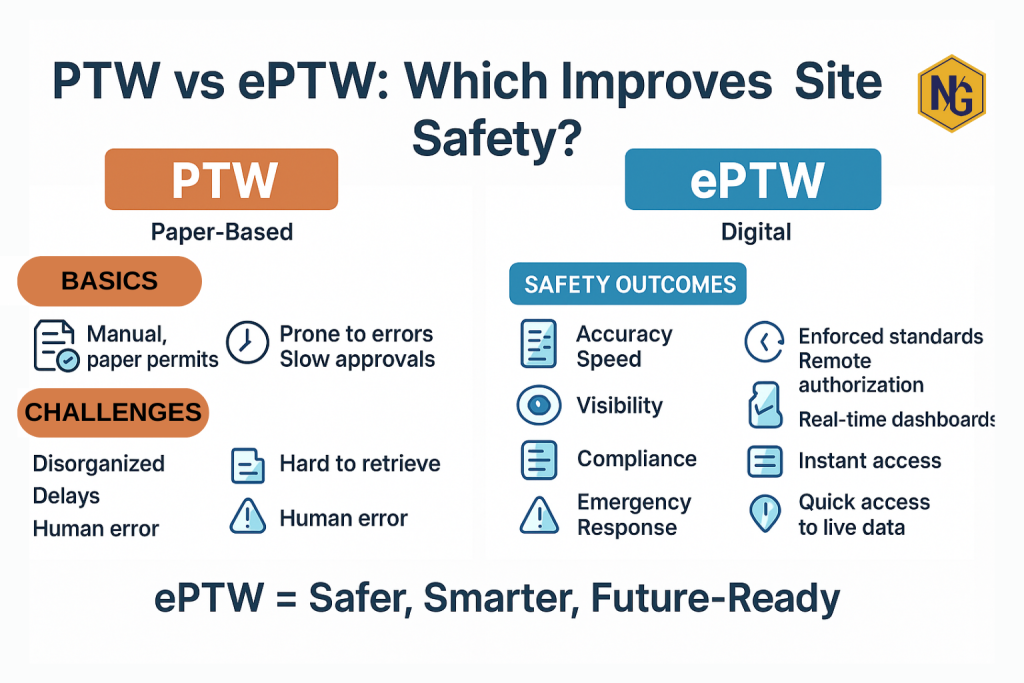
- Accuracy of Information:Paper permits are prone to human error, such as missing details or illegible handwriting. ePTW systems enforce mandatory fields and standard formats, reducing mistakes that could compromise safety.
- Speed of Approval:PTW requires physical movement of documents, which can delay approvals. ePTW allows remote authorization, speeding up the process without skipping essential checks.
- Visibility and Oversight:With paper, it is difficult to track multiple permits across different work areas. ePTW gives managers real-time dashboards, making it easier to spot conflicts, such as two high-risk activities happening too close together.
- Compliance Tracking:Audits with paper permits mean searching through stacks of files. With ePTW, records are instantly accessible, simplifying both internal reviews and external inspections.
- Emergency Response:In the event of an incident, knowing which permits are active can save valuable time. ePTW systems provide quick access to live data, while paper permits may take longer to retrieve.
The result is clear: ePTW systems enhance safety by reducing the chances of errors, delays, and oversight.
Challenges of Transitioning
That said, moving from PTW to ePTW is not without challenges. Some workers may resist adopting digital tools, especially on sites where paper processes have been the norm for decades. Training is essential to ensure that everyone understands how to use the system effectively.
Connectivity can also be an issue on remote job sites, though many ePTW platforms now offer offline capabilities. Cost is another consideration. While paper permits require minimal upfront investment, ePTW involves software, hardware, and training expenses. However, many organizations find that the long-term benefits, such as fewer delays, stronger compliance, and improved safety performance, outweigh the initial costs.
The cultural shift may be the biggest hurdle. Safety processes rely on human behavior, and introducing technology means asking teams to change habits. A successful roll-out usually involves clear communication, strong leadership support, and gradual adoption rather than an overnight switch.
Making the Choice
So, which system improves site safety? Traditional PTW still provides a structured framework for managing risk, but it leaves room for human error and inefficiencies. ePTW builds on that foundation and strengthens it with automation, transparency, and real-time visibility.
For companies serious about enhancing safety performance while improving efficiency, the shift to ePTW is a natural step. The choice often comes down to whether an organization is ready to embrace digital tools and invest in long-term improvements.
Final Thoughts
Safety regulations and standards will continue to evolve, but the principle remains the same: no job is worth doing unless it can be done safely. While PTW systems have served the industry for years, ePTW offers a more reliable, efficient, and future-ready approach.
Companies that adopt ePTW are not just keeping up with technology—they are taking a proactive step toward safer worksites. By reducing human error, improving visibility, and enabling faster decision-making, ePTW provides a stronger safeguard against accidents.
In the end, PTW and ePTW share the same goal: protecting workers and ensuring that hazardous tasks are completed safely. But when it comes to improving site safety in today’s fast-moving projects, ePTW has the edge.